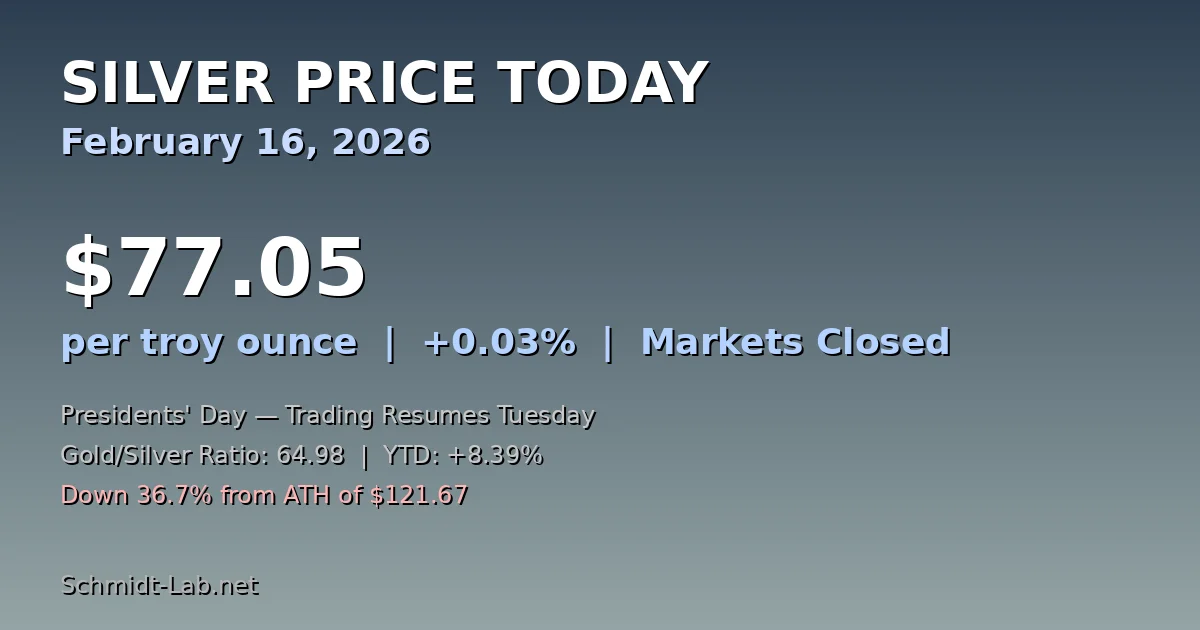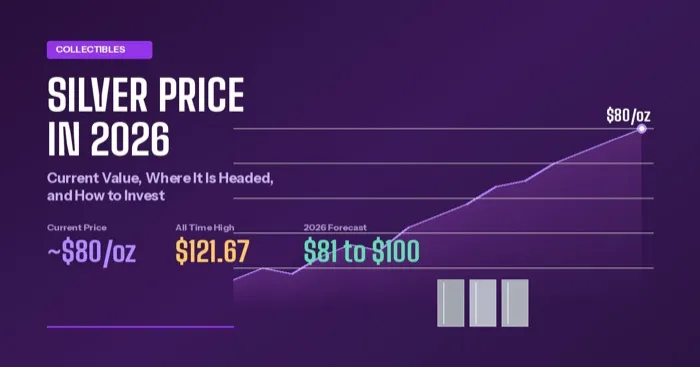
Silver had its best year in decades in 2025. The metal surged over 120%, broke above $100 per ounce for the first time, and briefly touched $121.67 on January 29, 2026, a price that would have seemed like fantasy just two years earlier when silver was trading around $24.
Live Silver Spot
USD per troy ounce • source: RapidAPI (real-time-metal-prices)
Updated just now. Refreshes every 60 seconds.
Then it fell. Hard. A sharp correction wiped out nearly a third of those gains in a matter of weeks, and silver is now hovering around $80 per ounce. That kind of volatility tends to split people into two camps: those who think the rally is over and those who see a buying opportunity.
The data suggests the story is more nuanced than either side admits. Silver is being pulled in two directions at once. Record industrial demand from solar panels, electric vehicles, and AI data centers is creating a genuine structural shortage. But speculative excess and profit taking after a historic run have pushed prices well below the January peak.
Here is where things stand, what the forecasts say, and what it means for collectors and investors.
Current Silver Price and Recent History
Live Silver Spot
USD per troy ounce • source: RapidAPI (real-time-metal-prices)
Updated just now. Refreshes every 60 seconds.
| Period | Silver Price Per Ounce |
|---|---|
| January 2024 | ~$24 |
| December 2024 | ~$30 |
| Late 2025 | ~$50 (first time in years) |
| January 29, 2026 (all time high) | $121.67 |
| February 16, 2026 (current) | Live price above |
The overall trend: silver has gained roughly 186% since the start of 2025. Even after the pullback, the price is more than triple what it was in early 2024.
What Major Banks Are Forecasting
Wall Street is broadly bullish on silver for 2026, though opinions vary on just how high it can go.
| Institution | 2026 Forecast | Key Reasoning |
|---|---|---|
| JPMorgan | $81 average | Structural supply deficit, strong industrial demand |
| Goldman Sachs | $85 to $100 | Bullish metals cycle, solar and EV demand |
| Bank of America | $55 to $65 (fundamentally justified) | More conservative, expects "sizable price reversals" |
The consensus: silver has moved too far too fast in the short term, but the fundamental supply and demand picture supports prices well above historical norms.
Why Silver Prices Are So High (The Supply Problem)
The single biggest factor driving silver prices is a supply deficit that has now persisted for six consecutive years. In 2026, global silver demand is expected to exceed supply by roughly 67 million ounces. The cumulative deficit from 2021 through 2025 totals approximately 820 million ounces of physical silver.
Why can the market not close the gap? Because 71% of the world's silver is mined as a byproduct of gold, copper, lead, and zinc mining. Silver miners cannot simply increase production when prices rise. They are dependent on the economics of those other metals.
Meanwhile, demand from three sectors is growing rapidly.
Solar energy is the largest single industrial consumer of silver, using an estimated 185 to 240 million ounces per year. Each solar panel contains 15 to 25 grams of silver. As global solar installations push toward 500 gigawatts annually by 2030, this number is only going up.
Electric vehicles use two to three times more silver than traditional cars. A conventional vehicle contains about 15 to 28 grams of silver. A battery electric vehicle uses 25 to 50 grams. With EV adoption accelerating worldwide, automotive silver demand (currently around 90 million ounces per year) is forecast to triple by 2030.
AI and data centers represent an emerging source of demand. High performance computing requires silver plated copper connectors to minimize electrical resistance and prevent overheating. As AI infrastructure expands, this sector is expected to become a meaningful new driver.
Industrial uses now account for more than 50% of global silver demand. That is a structural shift from a decade ago when investment and jewelry drove most of the market.
The Gold to Silver Ratio
One way investors gauge whether silver is cheap or expensive relative to gold is the gold to silver ratio. This number tells you how many ounces of silver it takes to buy one ounce of gold.
In April 2025, the ratio was above 100 to 1. By early 2026, it had fallen to around 50 to 1 before rebounding to roughly 74 to 1 in mid February. The historical average is 60 to 70 to 1, which suggests silver still has room to outperform gold on a relative basis.
How to Invest in Silver
There are several ways to get exposure to silver, each with different trade offs in terms of cost, liquidity, and tax treatment.
Physical bullion (bars and coins). You own the actual metal. This appeals to people who want a tangible asset outside the financial system. The downsides are storage costs, insurance, and dealer premiums (the markup above spot price). When you sell, you are subject to the collectibles capital gains tax rate (see below).
Silver ETFs. The two most popular options are iShares Silver Trust (SLV) with a 0.50% annual expense ratio and Sprott Physical Silver Trust (PSLV). Both track the price of physical silver. The key difference is tax treatment: SLV is taxed at the 28% collectibles rate, while PSLV may qualify for the lower standard capital gains rate of 15% to 20% for long term holdings.
Mining stocks. Companies like First Majestic Silver (AG), which derives 57% of revenue from silver, offer leveraged exposure to silver prices. When silver goes up, mining stocks tend to go up more. The reverse is also true.
abrdn Physical Silver Shares ETF (SIVR). This is the lowest cost physical silver ETF at 0.30% expense ratio, making it a good option for long term buy and hold investors.
Silver Coins for Collectors
The U.S. Mint dramatically increased prices for silver products in 2026, reflecting the higher spot price.
| Product | 2025 Issue Price | 2026 Issue Price | Change |
|---|---|---|---|
| Proof American Silver Eagle | $95 | $173 | +82% |
| Reverse Proof Morgan Dollar | $95 | $173 | +82% |
Each American Silver Eagle contains exactly 1 troy ounce of 99.9% pure silver. At current spot prices around $80, the $173 issue price includes a significant premium for minting, packaging, and collector demand.
For collectors on a budget, "junk silver" remains popular. These are pre 1965 U.S. dimes, quarters, and half dollars that contain 90% silver. They trade close to their metal value with low premiums, making them an accessible way to own fractional silver.
If you collect rare coins, you might also be interested in our guides to rare quarters in your pocket change and valuable baseball cards.
Tax Rules for Selling Silver
This is where many investors get surprised. The IRS classifies physical silver (and most silver funds) as collectibles, which means they are taxed differently than stocks.
| Holding Period | Tax Rate |
|---|---|
| Less than 1 year (short term) | Ordinary income rate (10% to 37%) |
| More than 1 year (long term, physical silver and SLV) | Up to 28% (collectibles rate) |
| More than 1 year (PSLV, mining stocks) | 15% to 20% (standard capital gains) |
High earners may also owe an additional 3.8% Net Investment Income Tax, bringing the effective maximum federal rate on physical silver sales to 31.8%.
Tax planning tip. If you plan to hold silver long term, choosing PSLV over SLV could save you 8 to 13 percentage points in taxes on your gains. Mining stocks also avoid the collectibles rate entirely. Consult a tax professional for your specific situation.
What Collectors and Investors Should Do Now
If you already own silver, the recent pullback from $121 to $78 is a correction, not a crash. The structural deficit and industrial demand trends have not changed. If your investment thesis was based on long term fundamentals rather than short term price momentum, the case remains intact.
If you are looking to buy, the current price around $80 is well below the January peak but still historically elevated. Dollar cost averaging (buying a fixed amount at regular intervals) can help smooth out the volatility.
If you are a coin collector, be aware that U.S. Mint premiums are at record levels due to the higher spot price. Secondary market coins from dealers may offer better value than buying directly from the Mint. American Silver Eagles, Morgan dollars, and junk silver all remain liquid and easy to trade.
Keep records. Whatever form of silver you buy, document the purchase date, price, and quantity. You will need this information to calculate your tax basis when you eventually sell.
Silver's long term supply and demand fundamentals are as strong as they have been in decades. The question is not whether silver has value. It is whether you can handle the volatility that comes with it.You May Also Like
- 2026 Topps Series 1: The Baseball Cards Collectors Are Fighting Over - Related article
- Silver Dimes Value Guide 2026: Mercury, Roosevelt, and Barber Dime Prices - Related guide for more information
- Coin Grading Guide for Beginners 2026: From Good to MS-70 - Related guide for more information
- Wheat Penny Value Guide (1909-1958) - Related guide for more information
- 2000 Sacagawea Dollar Value Guide - Related guide for more information
Sources
Written by
Sarah Kim
Collectibles market analyst covering precious metals, coins, and alternative investments.